The Origin
Nobody bet on that kid. Turns out he was the safest bet in the room
The CV is the professional version. This is the honest one. The one about a nerdy kid from a rural village in Bogor who wanted something nobody around him could name, chose the road everyone doubted, and kept walking it until the doubt ran out.
 Reva Wiki
Growing up
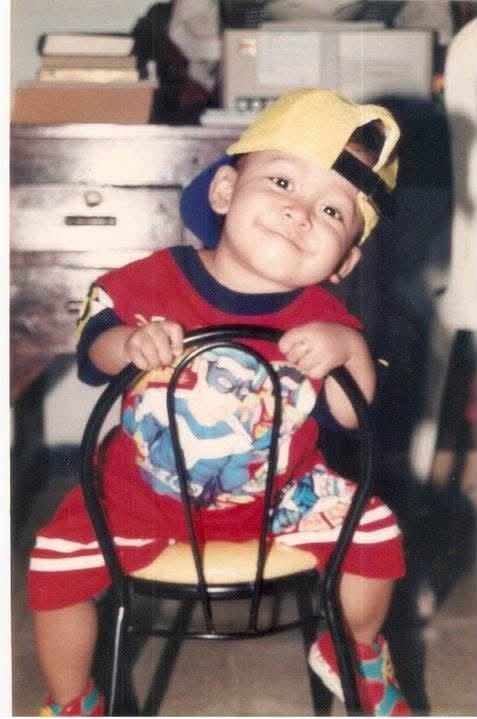
I grew up in a small village in Bogor, the kind people around there knew as the cassava farmer village. Ask any kid what they wanted to be and the answer was police, doctor, teacher, or military, in whatever order that week's cartoon put them in. Ask any parent what they wanted for their kid and the answer was simpler: PNS, a civil servant job, the one everyone's mother considered proof you'd made it. Nobody said engineer. Nobody had a reason to.
My first real contact with technology was a Siemens phone, a hand-me-down with more scratches than screen. I didn't care much that it was a phone. I cared about what was inside the menus, how the settings changed things, why the ringtone editor worked the way it did. It was the first object I'd ever held that had that many hidden layers, and I went looking for every one of them.
Then came a PlayStation 1, and that was the moment it stopped being curiosity and turned into love. I wasn't just playing the games, I was studying them: memory cards, cheat codes, why one disc loaded slower than another. Nobody had to tell me to pay attention. I just couldn't stop.
By primary school I had a small reputation: fastest typer in class, the one the computer lab teacher pointed to when someone needed help. I was also the one classmates lined up for when they wanted a Facebook account, as if that required a specialist. When I finally got my own PC and a dial-up connection, the kind that announced itself with that dying modem tut-tut-tut, I broke it constantly. I installed everything I could find until the machine caught a virus that corrupted half of it, then spent days figuring out how to fix it myself rather than tell anyone it happened.
That same PC gave me my first taste of local fame. Pet Society, a Facebook game everyone in school was addicted to, had ways around its own rules if you knew where to dig, and I dug. For a while I was the kid who could hack your pet's stats, a strange kind of celebrity to have in primary school, but I took it. It was the first time being good at something on a screen made me popular somewhere other than the screen.
Nobody around me was pointing toward the industry I'd eventually work in. I found the door myself, first in a scratched Siemens phone, then in a PlayStation 1, and once I saw what was on the other side, I never really looked away.
Choosing the trade
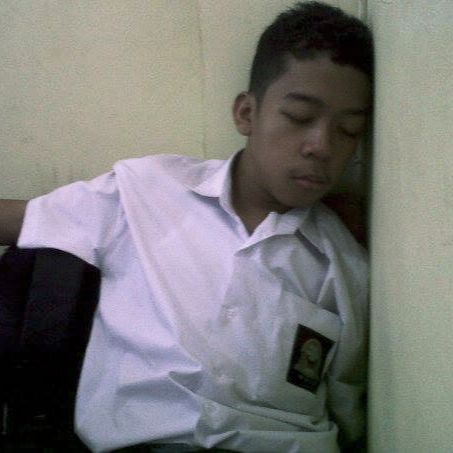
Junior school is where it stopped being just play. I found Python, and for the first time technology wasn't something to poke at, it was something with a shape, a logic, a future I could picture myself walking into. I fell in love with dismantling PC hardware for its own sake, not just to fix what had broken. I taught myself Excel macros because typing the same formula twice felt like an insult. I picked up Adobe Photoshop and Illustrator. I learned how to crack PC games, less for the free copy and more because breaking the lock taught me more than the game itself ever did.
In 2013 I chose IT, and it is hard to overstate how little that choice impressed anyone. Back then, "IT" meant "the guy who fixes the printer." My family pushed back from the start. Oil, economics, law; those were the real careers, the ones with "better prospects." It's a special kind of lonely, explaining a dream to people who love you and genuinely cannot see it.
I enrolled in the vocational school anyway. Computer networks, SMKN 3 Bogor, class of 2016, and this is where it all locked in. The OSI layers, the seven-layer model everyone complains about and I couldn't get enough of. Crimping a cable until the crimp was right, not just working, right, the color order still tattooed into my memory: white orange, orange, white green, blue, white blue, green, white brown, brown. Late nights on Cisco Packet Tracer because I wanted to see the packets actually move. Dismantling a PC stopped being a fix-it chore and became something closer to an art form. On-the-job training put me in front of my first real website build and my first real Linux box.
To my family it looked like settling. To me it was the first door that actually opened, and somewhere between the cable crimps and the packet traces, I stopped thinking of this as a subject I was good at. It was the way of life I was built for. The true love.
A degree, the long way round
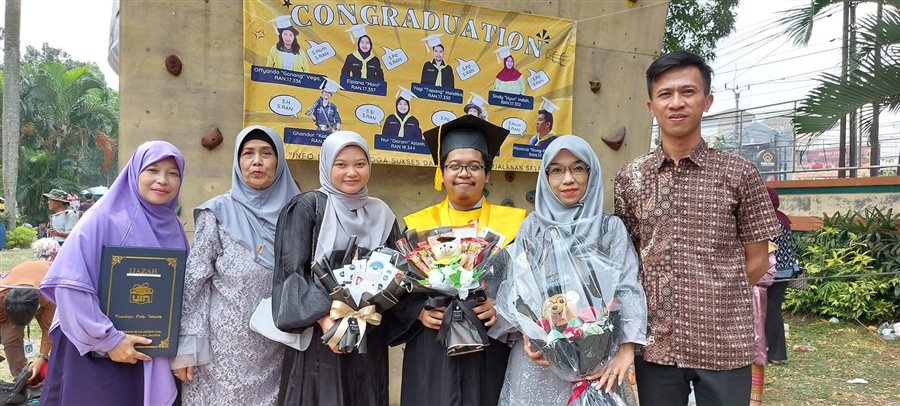
The degree came later, and out of order. I completed a Bachelor of Computer Science at UIN Syarif Hidayatullah Jakarta in 2023, years into full-time work, studying at night around a job that didn't slow down for exams. I didn't go back to school because I needed it for the work, I was already doing the work. I went back because my Mom wanted me to be sarjana, a university graduate, and in her eyes that title still mattered more than any job title I could point to. So I enrolled anyway, less to prove something to myself and more to give her the piece of paper she'd been waiting for.
Wanting the degree didn't mean she trusted the work that was already paying for it. Those years came with a soundtrack. Remote work was still a foreign concept before Covid, so while I sat at home keeping production systems alive, my Mom would pass by with the daily questions: "Are you really working?" "Why don't you go outside and find real work?" She wasn't being cruel. From where she stood, work was something you left the house for, and a son at a keyboard all day looked like a son going nowhere. She was worried. That's the version of doubt that's hardest to hear, because it comes from love.
I never had a clean way to defend it in the moment. I just kept showing up: production shift by day, lecture hall by night, an exam schedule I had to negotiate around on-call rotations, assignments written between incident tickets. There was no dramatic turning point where she suddenly understood. It was slower than that, more like the questions changing shape on their own, from "are you really working" to "how's the studying going," without either of us announcing the shift.
By the time I sat in those lectures I'd already run production incidents. The theory landed differently when I'd felt the thing it described break at 3 AM. I wasn't learning what a system was for the first time, I was finally getting the vocabulary for something I'd already lived through, which made four years of night classes feel less like catching up and more like closing a loop.
The degree didn't launch anything. The career had already started without it. What it did was put a name on the stubbornness, and give my family a stage where they could finally watch it pay off in public, cap and gown and all.
Learning on the front line
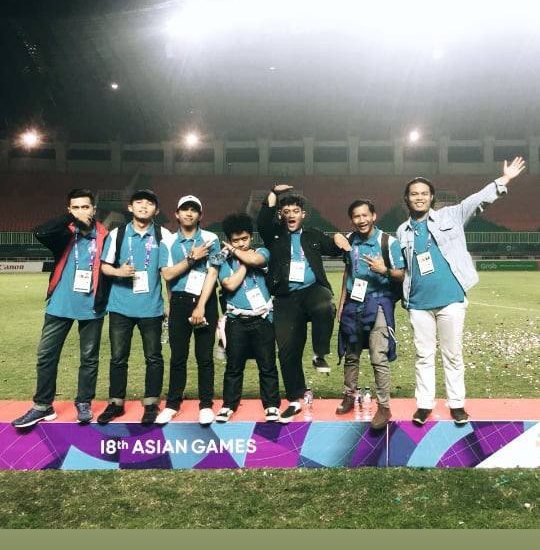
The strange thing about that graduation is what my family was really applauding. By the time I wore the cap and gown, the career they'd doubted had been running for five years and paying the bills for most of them. They were catching up to a story already in motion. So rewind to where that story actually starts.
My first real responsibility came in 2018, leading a small team keeping things running through the Asian Games. Big event, invisible work, and one clear measure of success: nobody notices you exist. That turned out to be the whole career in miniature.
In 2019 I joined BRIN, Indonesia's national research agency, repairing what was broken in an under-funded HPC lab. What I actually found there was a shift in how I thought about systems: infrastructure works better described than babysat. I didn't have the words for it yet, but that's where everything since really starts.
Late 2020 put me on the front line of Netmonk at Telkom Indonesia. Deployments were slow and manual, incidents were slow to even understand. What I discovered was simple: most of the pain wasn't the systems failing, it was nobody being able to see them clearly. Fixing that visibility problem mattered more than any single tool I used to do it.
In 2022 I was promoted to lead the DevOps initiative, inheriting a platform that had quietly outgrown its own architecture, one client deployment at a time. The real discovery wasn't the migration itself, it was realizing architectures expire silently, and somebody has to be willing to notice before it becomes a crisis.
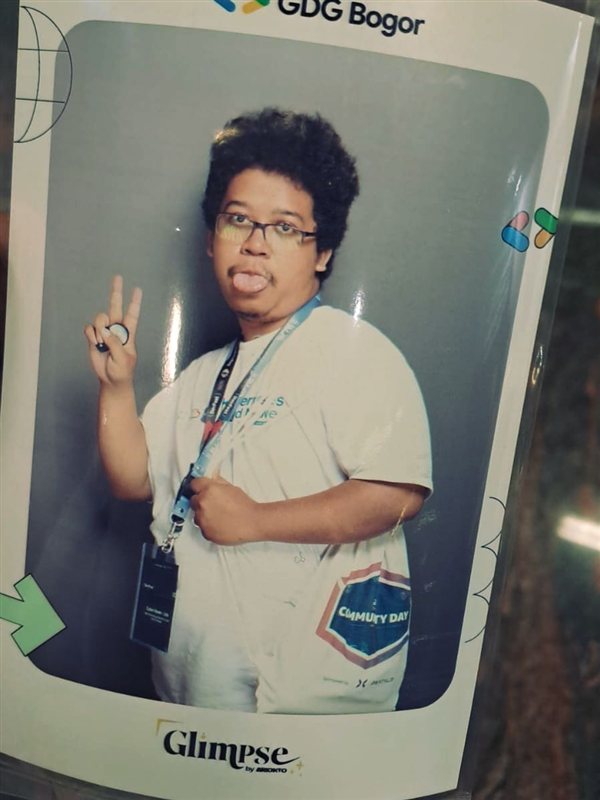
And running under all those years, one constant habit: showing up to meetups and community days, collecting lanyards, cheering for whoever was on stage. I liked being the guy in the crowd. Keep that picture in mind, because it's about to flip.
The mountaintop, now in view
2024 took me to PT HM Sampoerna, one of Indonesia's largest tobacco companies and part of Philip Morris International, as a senior DevOps engineer leading seven people. This was a different kind of pressure: a global multinational, an estate built through years of console clicks, and compliance standards where a mistake doesn't stay local, it echoes across every country the company touches. Cleaning that up quietly, without breaking anything an auditor would notice, taught me more about discipline than any outage ever did.
In January 2025 I joined Tech Mahindra to direct AIOps R&D for Indonesia's largest telco cloud operation, a system sitting under millions of people's phones, prepaid balances, and daily connectivity. At that scale an incident isn't an inconvenience, it's measured in billions of rupiah lost per hour, and a headline if it drags on long enough. The mandate was simple to say and hard to do: stop SLA attainment from depending on how many experienced people happened to be awake at 3 AM. It's the same instinct from the HPC lab, pointed at a much harder, much more expensive problem.
The work that matters most at this scale is usually invisible. Nobody notices the outage that didn't happen, the audit that passed without a fight, the 3 AM page that never went out. Same instinct from the Asian Games, just with a lot more zeros behind it now.
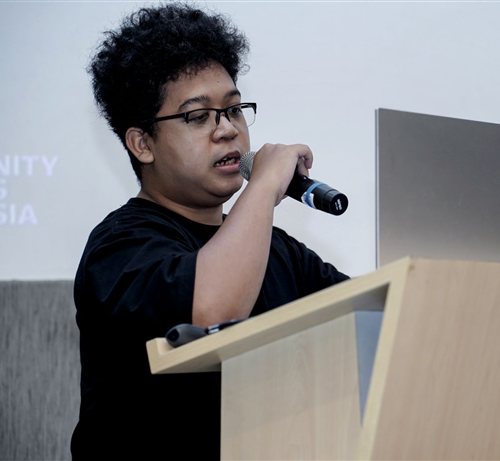
And the guy in the crowd? Somewhere along the way the community handed him a mic. These days I get invited to share what I've learned at the same kind of events I used to attend just for the lanyards, standing where the people I once cheered for stood, looking out at some quiet kid in the audience and knowing exactly what's going on in his head.
What's next
Twelve years in, I can finally see the ladder I didn't know I was climbing. From dismantling PCs to managing fault-tolerant cloud infrastructure. From connecting LAN cables to orchestrating microservices. From fixing Windows installations to configuring agentic AI. Every rung looked ordinary while I was on it. Only from here does it look like a staircase.
The awkward village kid ended up working remotely for a global multinational, a sentence nobody back home would have put money on. The family that once asked when I'd find real work now asks how the real work is going. I never needed them to be wrong. I just needed enough time to show them what I saw.
There's still a long road ahead. I won't pretend to be a prophet about where AI takes this industry, nobody honest is one. But the problems keep getting bigger: more scale, more industries, more decisions moving into systems somebody has to govern properly. To me that's not a warning. That's an invitation with my name on it.
Mostly, though, I'm grateful. For the journey, for the people who walked parts of it with me, and for the privilege of belonging to this industry at all. Somewhere in a village in Bogor there's still a quiet boy taking a machine apart to see what's inside. I do my best work on the days I remember I'm still him.
So whatever comes next, agentic AI, automation eating half of what I do today, an industry that won't recognize itself in five years, bring all of it. Nobody bet on the village kid either, and he became the safest bet in the room. The unknown doesn't frighten me. I was built there. And you don't fear the thing that built you: you take it apart to see what's inside.